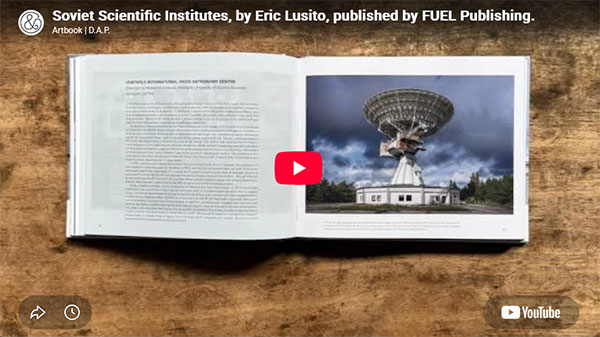
Soviet Scientific Institutes

A journey through time, space and science.

Over the last hundred years, science and technology have deeply transformed our societies. The USSR appeared to be the most exalted by the power of science, up to the point of irrationality. The Soviets promoted the cult of science as an ideological tool to unseat religion and rapidly modernize the country. The USSR spent lavishly to build ever bigger and more sophisticated machines, and eventually became a technological superpower. These utopian worlds of Soviet modernity were embodied in "big science" projects involving up to several thousand people. Science flourished but the research work, designed mostly for the military, was carried out behind closed doors in an atmosphere of complete secrecy.

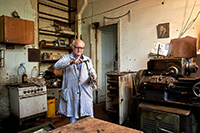
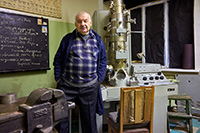
The status of scientists, once prestigious, changed radically after the collapse of the system. During the turmoil of the 1990s, the institutes were virtually abandoned with no funding. The extremely low salaries — sometimes as little as $5 per month — led to disillusionment and a brain drain. Despite the hardships they faced, some scientists persevered and devoted their lives to saving their facilities.

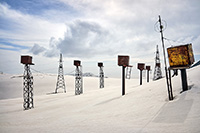
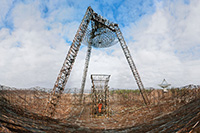
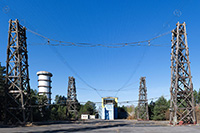
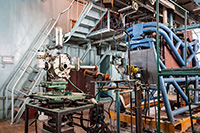
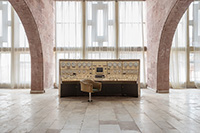
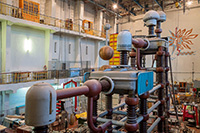
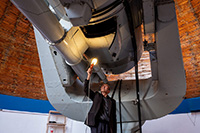
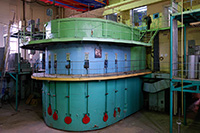
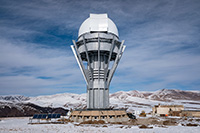
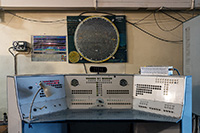
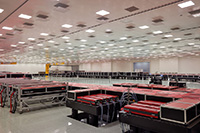
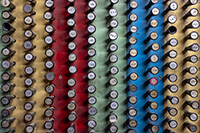
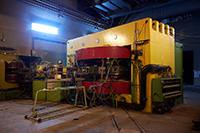
Synchrotron, high-voltage laboratory, nuclear research reactor, radio telescope, cyclotron, stellarator… These monumental installations could have been taken straight from the pages of a comic book or graphic novel, or from the works of science fiction writers such as Jules Verne and H. G. Wells. Their gigantic control panels and mysterious machinery bear witness to our never-ending quest for knowledge.

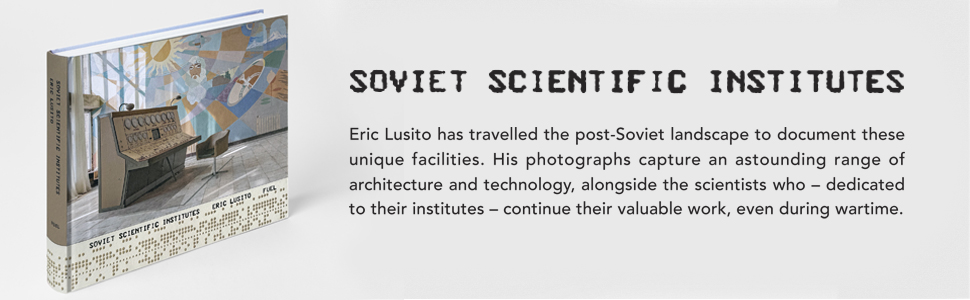
The book documents 22 Soviet-era research institutes across eight countries (Ukraine, Armenia, Kazakhstan and others), and tells their stories that are as diverse as they are complex: laboratories that have survived political upheaval, funding shortages, and, for some, the ravages of war. Despite all these difficulties, these institutions strive to keep a remarkable scientific tradition alive.

« Former Soviet scientific megastructures captured in striking photos. » — New Scientist « Reaching for the stars: enduring symbols of Soviet science – in pictures. The photographer Eric Lusito takes us on a scientific journey through space and time in a book on Soviet scientific institutes. » — The Guardian « Soviet Scientific Institutes opens a portal into a hidden world where ambition, secrecy, and science intersect. In this striking volume, Eric Lusito documents Soviet-era research facilities across former republics of the USSR, revealing spaces that feel equal parts laboratory, cathedral, and science fiction set. Gigantic control panels, towering telescopes, and enigmatic machinery populate his images, evoking a surreal, almost fantastical vision of Cold War-era ambition. Yet behind the theatrical scale lies a history of real human effort, secrecy, and scientific pursuit. Lusito’s lens captures these spaces with precision and wonder, highlighting the unintentional beauty of complex machinery. His photographs combine documentary rigor with cinematic composition. Soviet Scientific Institutes is more than a photographic record; it is a meditation on ambition and human curiosity. Lusito invites viewers to contemplate the intersections of technology, secrecy, and aesthetics, offering a rare glimpse into a hidden epoch of scientific exploration that continues to resonate today. » — All About Photo « These gigantic facilities radiate a sense of power, whether from the tile murals that speak of colossal revolutionary effort, or the vast analogue control panels that restrained who knows what daunting currents or processes. And without exception, all speak of an eerie sci-fi vision of a future that never came. » — Strong Words Magazine « Lusito’s camera takes us on a fascinating tour. There’s an obvious retro-tinged delight in these images, along with poignant schadenfreude at the combination of misplaced optimism and downright mystery. » — Jonathan Bell, Wallpaper* « Lusito’s project is not only an archival record but a study of scientific continuity through instability — what survives, what is repurposed, and how infrastructure becomes a narrative of scientific identity after political rupture. » — a/books « Il libro offre un’importante testimonianza storica in merito al sogno tecnologico bolscevico. L’indagine visiva racconta una storia di segretezza e smisurata ambizione, mostrando il ruolo cardine della scienza nel definire l'identità di un intero sistema geopolitico. Uno dei capitoli più interessanti del libro è quello dedicato all'Ucraina, che all'epoca passò nel giro di pochi anni dall'essere l'epicentro delle purghe di Stalin a diventare un polo scientifico strategico per tutta l’URSS. Gli scatti di Lusito e le didascalie a corredo descrivono l’incredibile impegno profuso dai ricercatori contemporanei, che continuano a operare ancora oggi in molte di queste strutture, lavorando anche durante i bombardamenti pur di portare avanti i loro studi. » — SKY Arte
  • Former Soviet scientific megastructures captured in striking photos.New Scientist

  • Reaching for the stars: enduring symbols of Soviet science – in pictures. The photographer Eric Lusito takes us on a scientific journey through space and time in a book on Soviet scientific institutes.The Guardian

  • Soviet Scientific Institutes opens a portal into a hidden world where ambition, secrecy, and science intersect. In this striking volume, Eric Lusito documents Soviet-era research facilities across former republics of the USSR, revealing spaces that feel equal parts laboratory, cathedral, and science fiction set. Gigantic control panels, towering telescopes, and enigmatic machinery populate his images, evoking a surreal, almost fantastical vision of Cold War-era ambition. Yet behind the theatrical scale lies a history of real human effort, secrecy, and scientific pursuit. Lusito’s lens captures these spaces with precision and wonder, highlighting the unintentional beauty of complex machinery. His photographs combine documentary rigor with cinematic composition. Soviet Scientific Institutes is more than a photographic record; it is a meditation on ambition and human curiosity. Lusito invites viewers to contemplate the intersections of technology, secrecy, and aesthetics, offering a rare glimpse into a hidden epoch of scientific exploration that continues to resonate today.All About Photo

  • These gigantic facilities radiate a sense of power, whether from the tile murals that speak of colossal revolutionary effort, or the vast analogue control panels that restrained who knows what daunting currents or processes. And without exception, all speak of an eerie sci-fi vision of a future that never came.Strong Words Magazine

  • Lusito’s camera takes us on a fascinating tour. There’s an obvious retro-tinged delight in these images, along with poignant schadenfreude at the combination of misplaced optimism and downright mystery.Jonathan Bell, Wallpaper*

  • Lusito’s project is not only an archival record but a study of scientific continuity through instability — what survives, what is repurposed, and how infrastructure becomes a narrative of scientific identity after political rupture.a/books

  • Il libro offre un’importante testimonianza storica in merito al sogno tecnologico bolscevico. L’indagine visiva racconta una storia di segretezza e smisurata ambizione, mostrando il ruolo cardine della scienza nel definire l'identità di un intero sistema geopolitico. Uno dei capitoli più interessanti del libro è quello dedicato all'Ucraina, che all'epoca passò nel giro di pochi anni dall'essere l'epicentro delle purghe di Stalin a diventare un polo scientifico strategico per tutta l’URSS. Gli scatti di Lusito e le didascalie a corredo descrivono l’incredibile impegno profuso dai ricercatori contemporanei, che continuano a operare ancora oggi in molte di queste strutture, lavorando anche durante i bombardamenti pur di portare avanti i loro studi.SKY Arte

Physics World (UK) — Physics in Ukraine: scientific endeavour lives on despite the Russian invasion Science (US) — Amid Russian attacks, Ukrainian astronomers fight to salvage a unique observatory